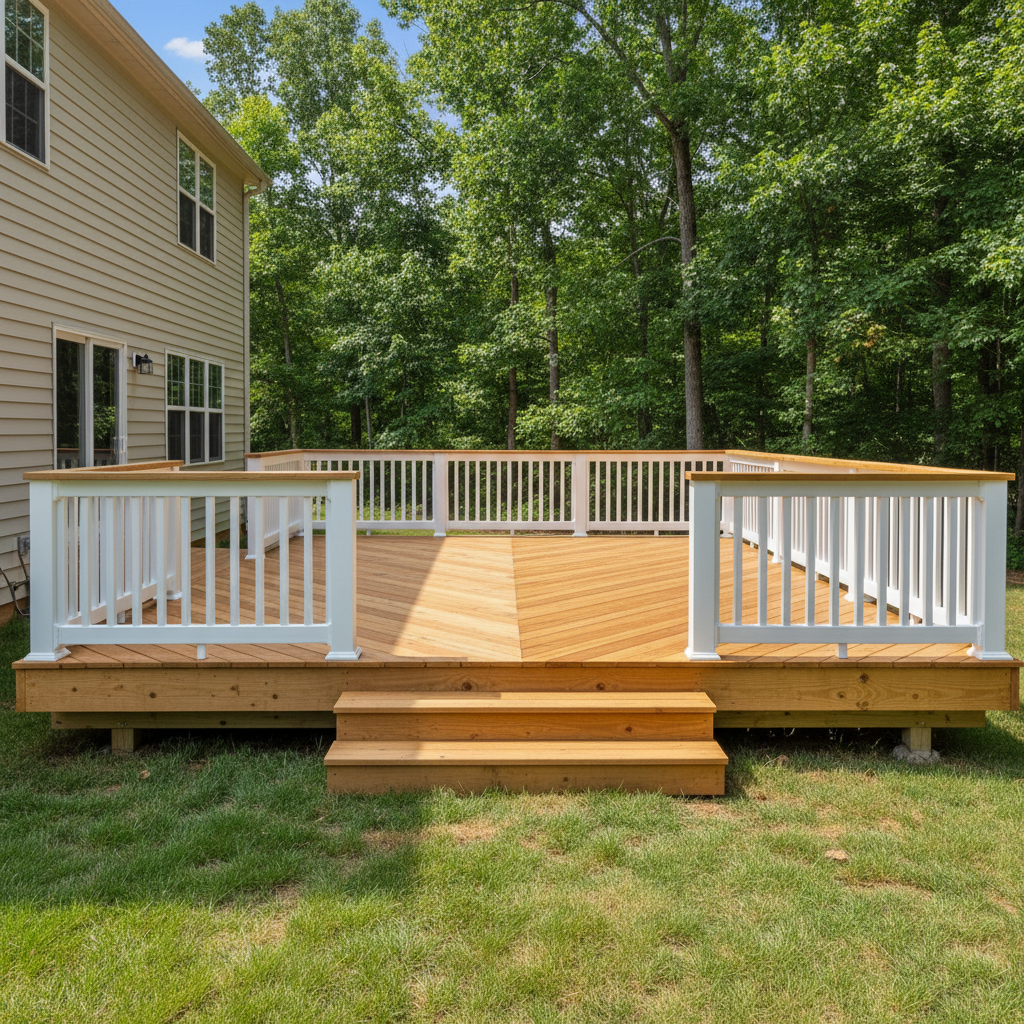
You've got a great deck, right? Whether I built it for you or someone else did, you want it to last. And it can, but it won't just take care of itself, especially not with our weather here in Lenoir City. We get everything from scorching summers to icy winters, and that really puts a deck through its paces. So, let's talk about what you need to do to keep your deck strong, safe, and looking good for the long haul.
Extending Your Deck's Lifespan
The biggest thing you can do to make your deck last? Protect it from the elements. Water is the enemy, plain and simple. UV rays are a close second. For wood decks, that means a good quality stain and sealer. You'll want to reapply that every 2-3 years, sometimes more often if your deck gets a lot of direct sun or heavy foot traffic. Don't cheap out on the product; a better stain gives better protection and usually lasts longer.
For composite decks, you don't have to worry about staining, which is a huge plus. But you still need to keep them clean. Dirt, mold, and mildew can build up, and while they won't rot the material, they'll make it look nasty and can even make it slippery. A good wash once or twice a year is usually enough, honestly.
Another big one is drainage. Make sure water isn't pooling on or around your deck. If you've got gutters, keep 'em clean so water isn't constantly dripping onto your deck boards. Got landscaping around the deck? Make sure it's not holding moisture against the posts or joists. That's a recipe for rot, especially with the humidity we get around here.
Regular Maintenance: What to Look For
Think of this as your seasonal check-up. I'd say do a good once-over in the spring and again in the fall. Here's what I look for:
- Cleanliness: Sweep off leaves, dirt, and debris regularly. Don't let wet leaves sit on the deck for weeks; they hold moisture and can stain. For wood, a soft brush and a mild cleaner can work wonders. For composite, a pressure washer on a low setting or a good scrub brush with soap and water is usually fine. Just be careful with pressure washers on wood; you can damage the fibers if you're not careful.
- Fasteners: Check all your screws and nails. Are any popping up? Are any loose? Tighten or replace them. Loose fasteners can lead to wobbly boards and create trip hazards.
- Deck Boards: Look for any signs of cracking, splintering, or cupping. For wood, these are signs the finish might be failing or the wood is drying out too much. For composite, look for any unusual fading or surface damage.
- Railing & Stairs: Give your railing posts and balusters a good shake. Are they solid? Are the handrails secure? Stairs get a lot of abuse, so check those treads and risers for any movement or wear. This is a big safety one.
- Underneath the Deck: Grab a flashlight and peek under there if you can. Look at the joists, beams, and posts. Are they straight? Any signs of rot, insect damage, or excessive moisture? This is where a lot of problems start before you see them on top.
Especially after a harsh winter, like the one we just had with those wild temperature swings, it's extra important to check for frost heave issues around your footings, particularly in areas with clay soil like we have in parts of Loudon County. That ground can really move.
Warning Signs of Bigger Problems
Sometimes, what looks like a small issue is actually a symptom of something bigger. Here are some red flags:
- Significant Wood Rot: If you can push a screwdriver into the wood easily, that's rot. It's not just a surface thing; it means the wood's structural integrity is compromised. You'll often see it at the ends of boards, where they meet posts, or where water tends to sit.
- Wobbly Posts or Railings: If your railing feels like it's going to give way, or a support post is visibly leaning, that's a serious safety hazard. Don't ignore it.
- Sagging or Uneven Deck Surface: If parts of your deck are noticeably dipping or aren't level anymore, it could mean foundation issues, failing joists, or a beam that's giving out.
- Insect Damage: Tiny holes, sawdust-like piles (frass), or tunnels in the wood are signs of termites or carpenter ants. These critters can do a lot of damage quickly.
- Excessive Board Movement: If boards are really shifting around when you walk on them, beyond just a little give, it means fasteners are failing or the underlying structure is compromised.
When to Call a Professional
Look, I'm all for DIY, but there are times when you just need to call in someone who knows what they're doing. If you see any of those major warning signs I just mentioned – significant rot, structural issues, insect damage – that's when you pick up the phone. Don't try to patch over a structural problem; it's just going to get worse and potentially become dangerous.
Also, if you're not comfortable with heights, or if the repairs require specialized tools or knowledge, it's better to get a pro. Fixing a small issue yourself is one thing; rebuilding a section of your deck or dealing with a compromised foundation is another. Here at Omega Decking, we've seen it all, and we're happy to come out, take a look, and give you an honest assessment. Sometimes it's a simple fix, sometimes it's more involved, but either way, you'll know where you stand. Your deck should be a place for enjoyment, not a source of worry.