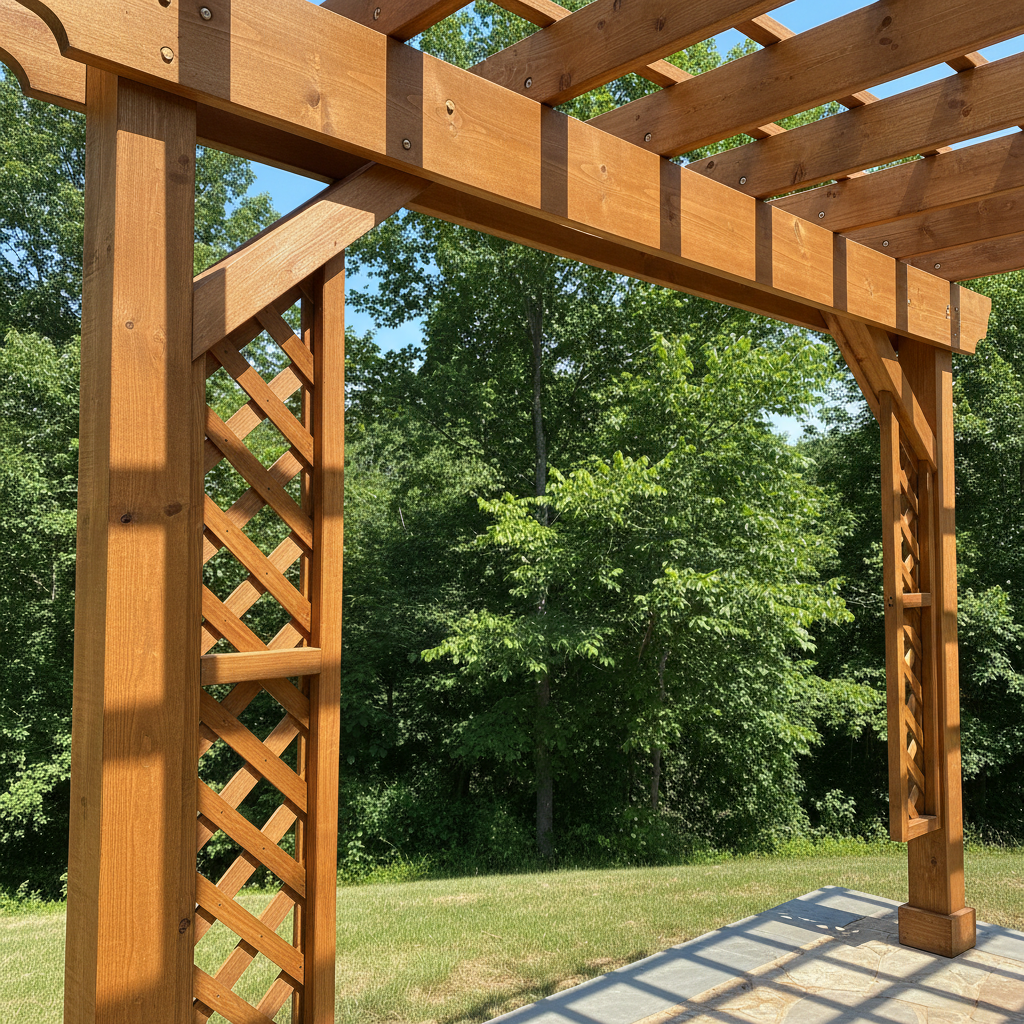
What's the real difference between a pergola and a gazebo?
This is probably the most common question I get. Folks often use the terms interchangeably, but they're definitely not the same thing. A gazebo is a fully roofed structure, usually octagonal or round, with solid sides or screens. It's meant to give you full shade and protection from rain. Think of it as an outdoor room. A pergola, on the other hand, is an open structure with a slatted or lattice roof. Its main purpose is to provide partial shade and define an outdoor space, not to keep you completely dry. It lets light and air through, creating a more airy, open feel. You can grow vines over it for more shade, but it's not a rain shelter.
Do I need a building permit for a pergola in Lenoir City?
Alright, this is a big one, and the answer is, it depends. For most smaller, freestanding pergolas, you probably won't need a permit here in Lenoir City or Loudon County. But if it's attached to your house, or if it's over a certain size (usually 200 square feet, but always double-check with the county planning department), or if it's going to have electrical work, then yes, you'll absolutely need a permit. It's always best to make a quick call to the Loudon County Planning Department just to be sure. They're usually pretty helpful. You don't want to build something only to find out later you have to tear it down or pay fines.
What's the best material for a pergola in our Tennessee weather?
Here in Lenoir City, we get a mix of everything – hot, humid summers, some pretty cold winters, and plenty of rain. So, you need materials that can stand up to that. For wood, cedar and redwood are excellent choices because they're naturally resistant to rot and insects. Pressure-treated pine is a more budget-friendly option, but it needs regular sealing and staining to last. Vinyl or composite pergolas are also popular. They're practically maintenance-free, won't rot, warp, or get eaten by bugs, and they come in a bunch of colors. The upfront cost might be a bit higher, but you'll save a lot on upkeep over the years. I've built plenty of all types, and each has its pros and cons depending on your budget and how much maintenance you're willing to do.
How much shade will a pergola actually provide?
That's a fair question, especially with our Tennessee sun. A standard pergola with widely spaced rafters will give you dappled shade, not full shade. It's great for breaking up the direct sun and making a space feel cooler, but you'll still get sun exposure. If you want more shade, you've got options. You can add more closely spaced rafters, use a lattice top, or install a retractable canopy. Growing climbing plants like wisteria or grapevines over it also works wonders, but that takes time. It really depends on what you're looking for – a little relief from the sun or almost full coverage.
Can I build a pergola myself, or should I hire a professional?
Look, if you're handy with tools, have some experience with construction, and you're good at following plans, a smaller, simpler pergola might be a DIY project for you. There are tons of kits out there that make it easier. But if you're talking about a larger, custom-designed pergola, especially one that's attached to your house or involves complex joinery, I'd strongly recommend hiring a professional. There's a lot that goes into making sure it's structurally sound, properly anchored, and built to last through our unpredictable weather. Plus, a good contractor will handle the permits if needed and ensure everything is up to code. At Omega Decking, we've seen plenty of DIY attempts that ended up costing more to fix than if they'd just hired us from the start.
What kind of maintenance does a pergola need?
Maintenance really depends on the material. If you go with wood, you'll need to clean it periodically and reapply a stain or sealant every couple of years to protect it from the elements and keep it looking good. This is especially true for pressure-treated pine, which can splinter and gray if not maintained. Vinyl or composite pergolas are much lower maintenance – usually just a good wash with soap and water once a year to remove dirt and mildew is all they need. If you've got climbing plants, you'll need to trim them back regularly to keep them from getting too heavy or damaging the structure. It's not a huge chore, but it's something to factor in when you're choosing your material.
Will a pergola increase my home's value?
Generally, yes, a well-designed and properly built pergola can add value to your home. It expands your usable outdoor living space, which is a big draw for potential buyers, especially in neighborhoods around Fort Loudoun Lake where outdoor living is key. It shows that you've invested in your property and created an attractive, functional area for entertaining or relaxing. Just make sure it's built to last and complements your home's style. A flimsy, poorly constructed pergola won't do you any favors, but a quality one can definitely be a selling point.